By the time the Yule Lads have finished filling their family’s mountain home, something else has already been happening across Iceland.
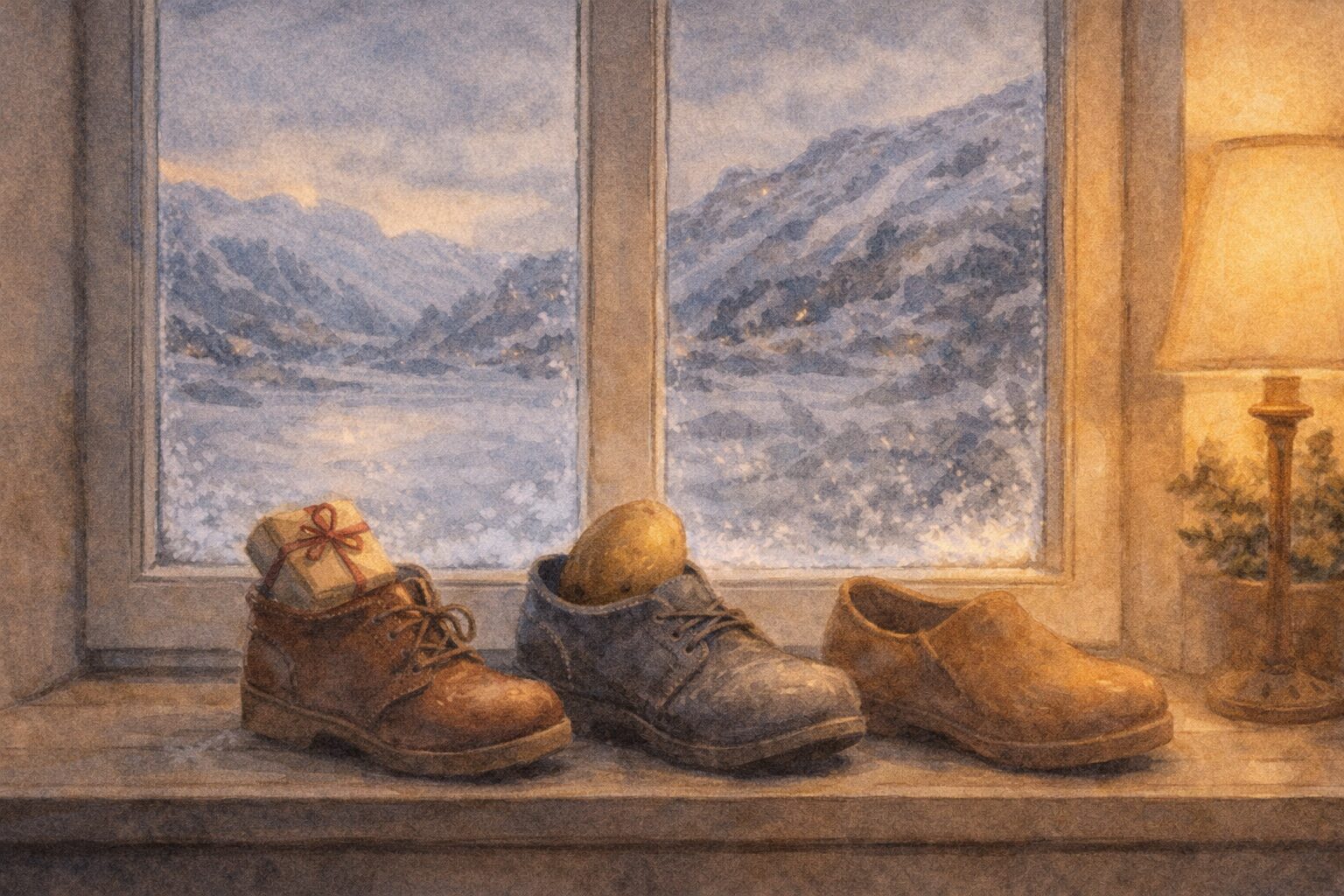
Shoes have been appearing in windows.
Not all at once, but one here and another there. Small shoes and worn boots. Slippers that have clearly been cleaned more carefully than usual. They line windowsills in apartments, farmhouses, and towns along the coast, waiting quietly through the night.
The children check them each morning. Some mornings bring a small gift. Potatoes appear on other mornings. Both things make those children laugh, and a potato never feels like a punishment. It’s not a warning, but a piece of the game itself. A shared understanding that the Yule Lads are watching, noticing, and still learning alongside the children who wait for them.
I have watched children explain this to one another many times. They speak with ease and excitement. They sound proud, as if they are taking part in something important.
In Iceland today, the Yule Lads are not used to frighten children into behaving. They are an invitation into the season. Their stories are told in classrooms, shared in drawings, acted out in winter plays, and laughed over at kitchen tables. Children know their names. They know their habits. They recognize themselves in them, especially when they would rather grab than wait, or peek instead of ask.
What strikes me most is how comfortably these stories live in everyday life. Children talk about which Yule Lad arrived last night the same way they talk about snowfall or daylight returning. It is part of the rhythm of December. Parents listen without correcting too much. Teachers smile and let the conversations wander. Nobody rushes to explain the lesson, because the story already knows how to do its work.
The Yule Lads are mischievous, but they are not cruel. They are curious, but they are not careless. They test boundaries, and then they learn what happens when a house grows full and people notice one another more closely. Icelandic children understand this instinctively. They do not need the stories spelled out. They live them.
I have seen children draw the Yule Lads with crooked hats and long noses, laughing as they argue about which brother would be the loudest or the hungriest. I have heard them debate which Yule Lad they would rather meet first. These are not fearful conversations. They are affectionate ones.
What the children seem to know, and what the adults quietly protect, is that winter already carries enough darkness. Stories do not need to add more. Instead, they add warmth. They add recognition. They add a sense that everyone is learning together, even the ones who sometimes make a mess of things.
That is what I admire most about how families in Iceland tell these stories now.
The Yule Lads still arrive one by one. Shoes still wait in windows. Potatoes still appear now and then. But the heart of the tradition has shifted toward kindness, humor, and shared anticipation. The season becomes something children take part in, not something that happens to them.
From where I stand, that feels wise, and it feels familiar in a way I recognize right away.
When I listen to Icelandic children talk about the Yule Lads, I hear something familiar from my own work in winter. People believe that sharing wonder works best. That mischief is part of learning. And that the most important thing a holiday figure can do is help families gather closer, not pull them apart.
In the next post, I will speak more directly about that recognition, and about my own thoughts on this lively troll family who has learned how to walk gently alongside children in the darkest weeks of the year.
I have a great deal of affection for them.
And I think you will understand why.
More from Iceland’s Christmas Legends
- Santa’s Northern Neighbors
- Grýla: Winter Mother of the Mountains
- Leppalúði: The Quiet Troll Dad
- Jólakötturinn: The Great Yule Cat of Iceland
- The First Four Yule Lads
- The Middle Five Yule Lads
- The Last Four Yule Lads
- How Icelandic Children Celebrate with the Yule Lads (Current)
- What Santa Thinks of the Yule Trolls
- Why These Stories Matter in the Dark of Winter
Leave a Reply